
Local Matters: Where You Live
LifeAgentsNews & Magazines
4.943.00 Reviews
- Version
- 1.9.4
- Installs
- 10.00K
- Age Rating
- Everyone
Screenshots
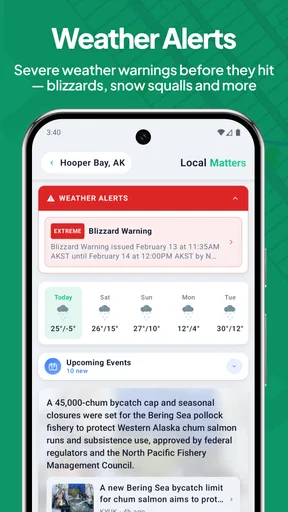
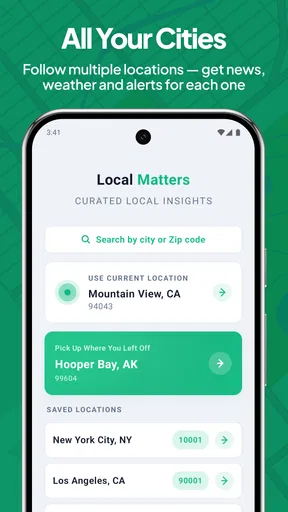
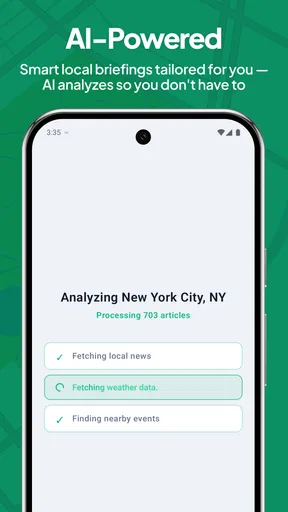
Our Review of Local Matters: Where You Live
 Analysis by Appyee
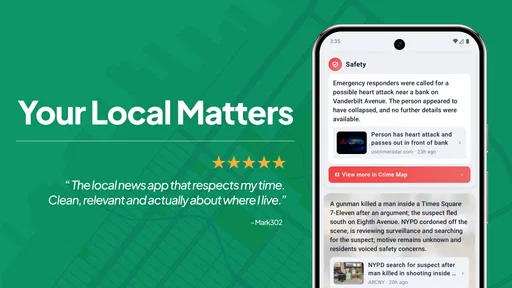
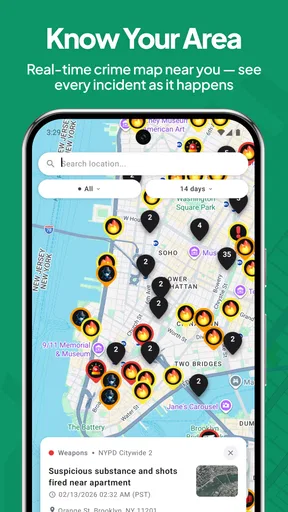
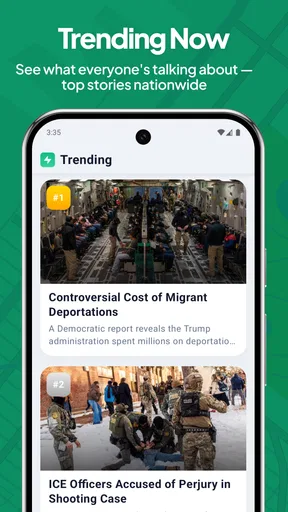
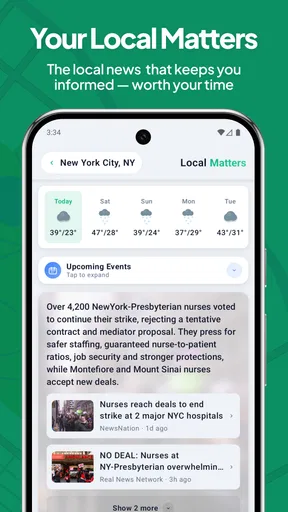
I like local news apps when they help me answer a simple question quickly: “What matters around me today?” Local Matters: Where You Live is built around that idea, combining safety alerts, nearby news, and weather in one personalized news-and-magazines app. It is free, rated for Everyone, and comes from LifeAgents, so the basic barrier to trying it is low.
After spending time with it, my impression is that its strongest quality is focus. Instead of asking me to browse a large national feed and hunt for nearby information, it aims to put local context first. That makes it especially appealing when I want a quick sense of what is happening close to home rather than a long reading session.
The app has a 4.9 average from around 338 ratings and has passed 10 thousand installs, which gives it a promising early reception without making it feel like a mainstream news giant. It was released on December 18, 2025, and version 1.9.4 is the version to look for when installing it. The minimum requirement is Android 8.0, keeping it accessible to many older phones.
How Local Matters feels during everyday use
I find the best way to judge Local Matters in everyday use is to ask whether it helps me make a small, timely decision—not whether it can replace every news source on my phone. Its local focus makes a quick check feel purposeful, while the next section looks at the choices and trust considerations I would weigh before relying on it regularly.
A quick start is more important than a crowded feed
For this kind of app, perceived speed is less about flashy animation and more about how quickly I can understand the screen. A local information tool has a practical job: open it, see the relevant items, and decide whether something needs my attention. Local Matters is most convincing when treated as a short daily check rather than as a replacement for every news source I use.
The combination of safety alerts, local reporting, and weather creates a useful first screen in principle because these subjects often overlap in real life. A weather change may affect a commute, a local event may change traffic, and a safety notice may be more important than a national headline. Bringing those concerns together reduces the need to jump between separate apps.
I would not judge it by the same standard as a full newspaper app. Large news platforms usually offer deeper archives, broader sections, opinion columns, video, and extensive search tools. Local Matters makes a different trade-off: it is more useful when proximity matters, while a general news reader remains better for national and international coverage.
Personalization is useful only when the location is right
The app’s central promise depends on showing information connected to me. That means the first meaningful step is making sure the selected area reflects where I actually live, work, or regularly travel. If I spend part of the week in another town, a single home location may not cover every situation I care about.
This is one of the less obvious trade-offs of hyper-local news. A narrow feed can feel wonderfully relevant, but it can also leave out useful information just beyond the chosen area. I would use the app as a local starting point and keep a broader news source for regional stories that cross city boundaries.
A practical routine is to check it once in the morning for weather and overnight alerts, then again before leaving work or school. That avoids turning every notification or headline into a distraction. The app makes more sense as a habit that supports decisions than as an endless scrolling destination.
What happens during a busy news moment
Heavy-use moments are where a local information app earns its place. During severe weather, a public safety situation, or a fast-moving neighborhood event, I would expect to open the app repeatedly and scan for changes. The value then comes from reducing the time between opening the app and finding the relevant update.
That use case also exposes a limitation: several information types competing for attention can make prioritization important. Weather, alerts, and ordinary local stories do not carry the same urgency. I prefer an interface that lets me distinguish an immediate notice from something I can read later, and I would pay close attention to how clearly Local Matters separates those roles during a busy period.
For a commute, the workflow is simple. I can check the weather before leaving, look for a nearby alert, and then decide whether I need extra time or a different route. I would still verify critical travel decisions through an official source when the situation is serious, because a news app should complement direct public guidance rather than replace it.
Stability matters more than visual polish
A local news app does not need to feel elaborate to be useful, but it does need to recover gracefully. If I switch away to answer a message and return later, I want to continue from a sensible point instead of restarting the whole experience. The same applies after a weak connection or an interrupted loading attempt.
My performance judgement here is deliberately practical. Local Matters is a relatively focused app, and its purpose does not require the heavy media workload associated with video-first news platforms. That suggests a lighter everyday experience, although the actual feel will still depend on the phone, connection quality, and how much content is being loaded at a given time.
I would also avoid assuming that a quick opening means every update is instantly available. Local information can change rapidly, and network conditions can affect when fresh material appears. If I am checking for an urgent notice, I would refresh or reopen the relevant area rather than treating an older screen as definitive.
Recovery after interruptions
Recovery is easy to overlook until the app is needed urgently. A useful routine is to reopen it after moving from a poor-signal area to a stronger connection, then check whether the displayed weather and alerts have updated. If the app has been left in the background for a long time, I would also treat the first screen as a starting point and scan for the newest available items.
This is not a criticism unique to Local Matters; it is a normal concern for apps that depend on changing information. Still, it affects trust. I feel more comfortable relying on a local feed when its freshness is obvious and when older stories do not visually compete with current alerts.
For that reason, I would use the app in layers. First I scan for urgent items, then I read ordinary local news, and finally I use the weather information for planning. That order prevents a long article or a less important headline from hiding the reason I opened the app in the first place.
Battery, storage, and older devices
Because the app is centered on text-based local information, alerts, and weather rather than demanding game graphics, it should be a more realistic fit for modest hardware than a media-heavy application. The Android 8.0 minimum also means people with older supported phones can consider it instead of needing a recent device.
That does not mean every older phone will feel identical. Limited memory, an aging battery, or a crowded storage drive can affect any app’s launch and recovery behavior. If my phone already struggles when several apps are open, I would close unused apps before judging Local Matters, especially during a day when I switch between maps, messaging, and news.
Notifications are another resource and attention trade-off. Safety alerts can be valuable, but too many ordinary updates can make me ignore the important ones. I would keep urgent notifications enabled if they are useful to my routine and be selective with less important news prompts. That is a better balance than silencing everything or allowing every update to interrupt the day.
Who will get the most from it
I see the best fit in people who care about their immediate surroundings: residents who want neighborhood context, commuters who plan around local conditions, families keeping an eye on weather and safety information, and anyone tired of sorting through national headlines to find nearby news.
It can also suit someone who wants a low-cost way to begin a local-news habit. Since it is free, trying it does not require committing to a subscription before discovering whether the local coverage matches the places that matter to them. The Everyone age rating makes it approachable for a broad household audience.
I would be more cautious recommending it to a reader who wants investigative depth, a large international news selection, financial reporting, or a carefully organized archive. A broad newspaper app, a dedicated weather service, or an official alert channel may be the better primary tool for those needs. Local Matters is strongest as a focused local layer, not as a universal information replacement.
How it compares with familiar alternatives
Compared with a general news aggregator, Local Matters has a clearer local purpose. Aggregators are convenient when I want many publishers and subjects in one place, but they can make nearby information feel like just another item in a huge stream. Local Matters is more appealing when relevance to my location matters more than maximum variety.
Compared with a dedicated weather app, it is less specialized by design. A weather-only tool will usually be the better choice when I need detailed forecasts, maps, radar, or repeated weather checks. Local Matters becomes more convenient when I want weather beside safety information and local stories instead of opening several separate apps.
Compared with official alert channels, it offers a broader reading experience, but official sources remain important for authoritative instructions. I would use Local Matters to notice what deserves attention and then follow the responsible authority’s guidance for emergencies. That combination gives me convenience without confusing a news feed with an emergency command system.
Small habits that improve the experience
My first tip is to treat the app’s location choice as a practical setting, not a one-time detail. If my daily life spans more than one area, I would regularly consider whether the selected place still represents my needs. Local relevance is only helpful when “local” means the place I actually care about that day.
My second tip is to separate scanning from reading. I would first look for safety notices and weather changes, then return to ordinary stories when I have time. This makes the app faster in practice because I am not asking every visit to become a full reading session.
My third tip is to test the app during a calm period rather than waiting for an emergency. I would learn where alerts and weather appear, decide which notifications deserve attention, and see how the feed behaves after reopening. Familiarity built on an ordinary day is more useful than trying to understand the layout under pressure.
A fourth useful habit is to compare important local information with another trusted source. This is especially sensible for road conditions, closures, or safety instructions. The app can help me notice a developing issue, while direct official communication should guide serious decisions.
My performance verdict
Local Matters succeeds when I use it for what its name suggests: a concise view of information connected to where I live. Its focused combination of local news, safety alerts, and weather is more practical for quick checks than a broad feed filled with stories I do not need. The free price makes experimentation easy, and the support for Android 8.0 keeps it within reach of many older devices.
I would not choose it as my only news source. Readers who want deep national coverage, specialist reporting, or advanced weather tools will probably be happier pairing a stronger dedicated service with their local routine. I also would not rely on any single app alone for urgent instructions.
Still, I can recommend trying it if nearby information is the part of the news day I most often miss. The strongest approach is to configure it thoughtfully, scan urgent items first, manage notifications carefully, and use it alongside official sources when the stakes are high. With those expectations, LifeAgents’ app feels like a sensible everyday companion rather than an overloaded news replacement.
For me, the final appeal is its balance of scope and convenience. It does not need to do everything to be useful; it needs to make local awareness easier to maintain. If that is the gap in my current phone routine, Local Matters: Where You Live is a worthwhile free addition.
Verdict
Strengths of Local Matters: Where You Live
- Helps residents discover nearby events, services, and community activities.
- Useful for staying informed about local issues and neighborhood updates.
- Encourages interaction with nearby organizations and community groups.
- Location-focused content makes information more relevant than broad social networks.
- Can help users find independent local businesses and useful services.
Limitations of Local Matters: Where You Live
- Content quality may vary depending on local participation and activity.
- Some areas may have limited listings or fewer active community contributors.
- Location-based features may raise privacy concerns for cautious users.
- Notifications can become excessive when many local updates are enabled.
- The app may be less useful when traveling outside its supported communities.
Other Releases by LifeAgents
View All
InTown
News & Magazines4.6
Similar Picks in This Category
View All
Google News - Daily Headlines
Google LLC4.0

X
X Corp.4.8

Flipboard:Your Social Magazine
Flipboard3.4

Opera News: breaking & local
Opera4.5

Hindi News by Dainik Bhaskar
Dainik Bhaskar Group4.0

Way2News Daily News App
Way2News ( Formerly Way2SMS )4.6
Frequently Asked Questions
What is Local Matters: Where You Live?
Local Matters: Where You Live is designed to help residents stay informed about what is happening in their local area. The app typically brings together community news, local updates, events, notices, and information relevant to nearby neighborhoods. Its usefulness depends on the coverage available in your location, so the experience may vary between cities, towns, and regions.
Is Local Matters: Where You Live free to download and use?
The application can generally be downloaded without an upfront charge, but availability of specific features may depend on the service provided in your area. Some content or functions could be supplied by local organizations, publishers, or community partners. Before using it regularly, check the app’s current store listing and terms to confirm whether subscriptions, advertisements, donations, or other optional costs apply.
What information or permissions does the app require?
Local Matters: Where You Live may request access to your location so it can show information connected to your neighborhood or selected community. It may also ask for notification permission to deliver local alerts and updates. These permissions are not always essential for basic browsing, and you can usually manage them through your device settings. Review the privacy policy before granting access.
Can I use the app if I live outside a supported area?
The app’s usefulness is closely connected to its local coverage. If your town, city, or community is not supported, you may see limited information or no relevant updates at all. You should check whether your location appears in the app before relying on it. Coverage can also change over time as more local sources and participating communities are added.
Is Local Matters: Where You Live reliable for important local information?
The app can be convenient for discovering community news, events, and everyday local updates, but it should not necessarily be treated as the only source for urgent or official information. Content may come from different local contributors and can vary in accuracy, timing, and completeness. For emergencies, government notices, public safety instructions, or important deadlines, confirm details through official channels.
